Discovering how art helps mental health has reshaped the way clinicians, educators, and everyday individuals approach emotional recovery. A 2023 World Health Organization scoping review analyzed over 3,700 studies and concluded that creative engagement produces measurable improvements in both physical and psychological health outcomes across populations worldwide.
Yet most people still think of painting or drawing as a casual hobby rather than a clinically recognized intervention. The truth is far more compelling. Modern neuroimaging reveals that artistic activity triggers chemical changes in the brain that rival the effects of meditation, exercise, and even certain pharmaceutical treatments for anxiety and depression.
This guide goes beyond generic wellness advice. It explores the neuroscience, cites real clinical data, and delivers actionable strategies rooted in decades of therapeutic research. Whether you are a mental health professional, a patient seeking new pathways, or someone curious about the intersection of creativity and wellbeing, the insights ahead will change your understanding of what art can genuinely accomplish for the human mind.
Table of Contents
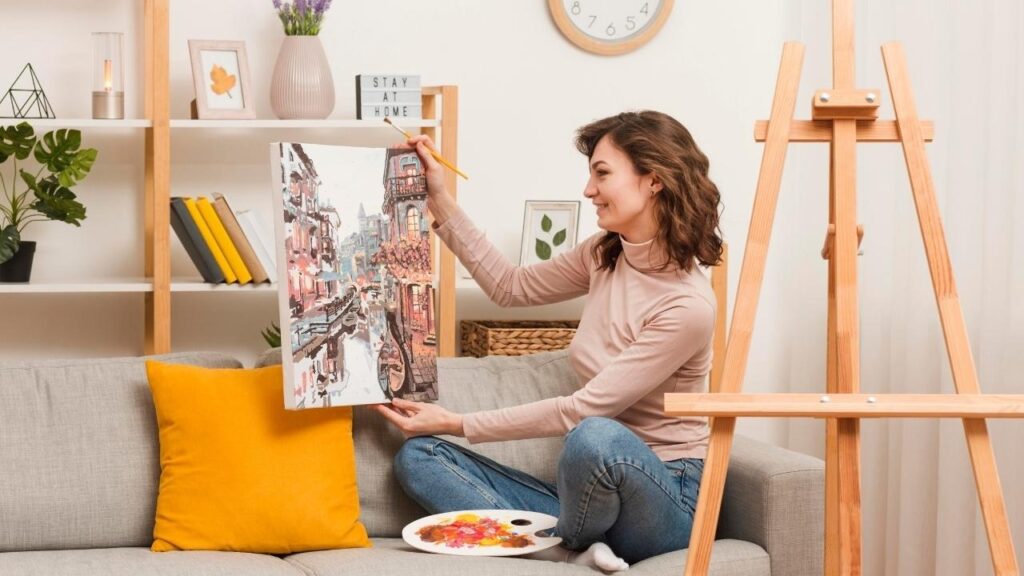
Understanding the Connection Between Creativity and Psychological Recovery
The relationship between artistic expression and emotional wellness is not a modern invention. It is a biologically embedded mechanism that humans have relied upon for thousands of years. What makes today different is that researchers can now observe and measure exactly what happens inside the brain during creative engagement.
Art-based therapeutic practices encompass painting, sculpture, music, dance, creative writing, and textile crafts. Each medium activates distinct neural networks, but they share a common outcome: regulation of the stress response system and stimulation of reward pathways that promote emotional balance.
What Clinical Art Therapy Actually Involves
Clinical art therapy is a regulated healthcare profession, not a casual craft session. According to the American Art Therapy Association, licensed practitioners hold master’s-level degrees and complete supervised clinical hours before treating patients. Sessions are structured around specific therapeutic goals, and artwork produced during treatment serves as a diagnostic and communicative tool rather than a decorative product.
This distinction matters because it separates evidence-based practice from the popular notion that simply picking up a paintbrush cures anxiety. Therapeutic art activities follow protocols informed by psychology, neuroscience, and trauma-informed care principles.
Historical Evolution of Therapeutic Art Practices
Ancient Civilizations and Creative Healing
Ancient Greek physicians, including Hippocrates, recognized that music and theatrical performance could alleviate melancholy and emotional disturbances. Aboriginal Australian communities used ceremonial sand painting as part of spiritual healing traditions spanning over 40,000 years. Chinese calligraphy practice was prescribed by traditional healers to restore mental harmony and focus.
These traditions shared a common intuition: creative engagement calms the troubled mind. Renaissance scholars later documented that artists who immersed themselves in their craft demonstrated greater emotional stability than their non-creative contemporaries.
Birth of Modern Art Therapy
British artist Adrian Hill introduced the term “art therapy” in 1942 after observing that drawing improved the emotional states of tuberculosis patients in a sanatorium. Around the same period, American psychoanalyst Margaret Naumburg pioneered the integration of visual art into clinical psychotherapy at New York University, demonstrating that patients could express deeply buried trauma through imagery when verbal language failed them.
By the 1960s, hospitals and rehabilitation centers across Europe and North America had adopted structured art therapy programs. The British Association of Art Therapists, established in 1964, helped formalize professional standards that elevated creative intervention from alternative practice to mainstream clinical tool.
The Neuroscience Explaining Why Creative Expression Heals
The healing power of art is not metaphorical. It is measurable, observable, and reproducible under controlled scientific conditions. Neuroimaging technology has allowed researchers to watch the brain transform in real time during artistic engagement.
Neurochemical Shifts During Artistic Activity
A landmark 2016 study published in the journal Art Therapy by Girija Kaimal and colleagues at Drexel University measured cortisol levels in participants before and after 45 minutes of art-making. Results showed a statistically significant reduction in cortisol across 75% of participants, regardless of their prior artistic experience or skill level.
When a person paints, sculpts, or draws, the brain simultaneously releases dopamine and serotonin neurotransmitters responsible for pleasure, motivation, and mood regulation. This chemical cocktail produces a calming effect comparable to outcomes associated with mindfulness meditation and moderate aerobic exercise.
Neural Plasticity and Long-Term Brain Adaptation
Perhaps the most significant discovery involves neural plasticity. Consistent creative practice strengthens the brain’s ability to form new connections and reorganize itself after injury or prolonged stress exposure. The prefrontal cortex, amygdala, and motor cortex activate simultaneously during art-making, creating cross-hemispheric communication pathways that improve emotional regulation over time.
Research published in Frontiers in Human Neuroscience has confirmed that patients who engage in creative activities for a minimum of eight weeks show measurable increases in gray matter density in regions associated with emotional processing and self-awareness. These are structural brain changes, not temporary mood fluctuations.
How Visual Processing Bypasses Verbal Limitations
Traditional talk therapy requires patients to translate their internal experiences into language a process that is neurologically demanding and sometimes impossible for individuals dealing with severe trauma, developmental disorders, or language barriers. When painful memories are translated into visual form instead, the brain processes them through alternative pathways that reduce emotional intensity while maintaining therapeutic engagement.
This mechanism explains why creative therapeutic programs produce sustained reductions in anxiety and depressive symptoms lasting months or years beyond the treatment period, as documented in longitudinal follow-up studies.
Why Creative Intervention Matters More Than Ever in 2026
The global mental health landscape has deteriorated dramatically. The World Health Organization reports that approximately 1 in every 8 people worldwide lives with a mental health disorder. Anxiety and depression surged by over 25% globally during the first year of the pandemic alone, and many nations still have not recovered.
Traditional treatment pathways medication and talk therapy remain indispensable. However, they face serious capacity constraints. Therapist shortages, long waiting lists, insurance barriers, and cultural stigma prevent millions of people from receiving adequate care.
The healing power of art addresses several of these gaps simultaneously. Creative healing techniques offer a nonverbal pathway that bypasses language limitations and cultural discomfort around discussing emotions. Community art workshops reduce stigma by framing participation as a creative experience rather than a clinical appointment. And the materials required are inexpensive, portable, and available in virtually every community worldwide.
Seven Evidence-Based Benefits of Therapeutic Art
Decades of peer-reviewed research have identified specific, reproducible benefits. The following represent the strongest findings from clinical literature.
1. Cortisol Reduction and Stress Relief: The Drexel University study cited above found cortisol decreases in 75% of participants after just one session. Repeated engagement amplifies this effect, training the parasympathetic nervous system to activate more efficiently during stressful situations.
2. Anxiety Symptom Management: A meta-analysis in the Journal of Affective Disorders reviewed 37 randomized controlled trials and concluded that art therapy produces statistically significant reductions in anxiety symptoms across clinical populations including cancer patients, trauma survivors, and individuals with generalized anxiety disorder.
3. Enhanced Emotional Regulation: The process of creating art teaches individuals to tolerate discomfort, sit with uncertainty during the creative process, and develop patience skills that directly transfer into healthier emotional responses in daily life.
4. Cognitive Function Improvement: Bilateral brain stimulation during art-making strengthens memory retention, problem-solving capacity, and mental flexibility. This benefit is especially pronounced in aging populations facing early-stage cognitive decline.
5. Accelerated Physical Recovery: Patients in rehabilitation programs who participate in art therapy demonstrate faster wound healing and stronger immune function. Reduced cortisol allows the immune system to operate more efficiently during recovery periods.
6. Social Connection and Isolation Reduction: Group art sessions foster genuine human connection through shared vulnerability and creative collaboration. A 2022 study in Arts in Psychotherapy found that group art therapy reduced loneliness scores by 34% among older adults over a 12-week period.
7. Relapse Prevention: Longitudinal studies tracking individuals recovering from depression and substance use disorders show significantly lower relapse rates among those who maintain regular creative practice compared to control groups relying solely on pharmacological treatment.
Art Therapy Outcomes: Key Research at a Glance
The following table summarizes pivotal studies demonstrating the measurable impact of creative interventions across populations.
| Study / Source | Population | Key Finding | Year |
| Kaimal et al., Drexel University | General adults | 75% showed cortisol reduction after 45 min of art-making | 2016 |
| WHO Scoping Review | 3,700+ studies | Creative engagement improves physical and mental health outcomes | 2023 |
| Arts in Psychotherapy (Group Study) | Older adults | 34% reduction in loneliness over 12 weeks | 2022 |
| Journal of Affective Disorders Meta-Analysis | Cancer, trauma, GAD patients | Significant anxiety reduction across 37 RCTs | 2021 |
| Frontiers in Human Neuroscience | Chronic stress patients | Increased gray matter density after 8 weeks of art practice | 2020 |
Real-World Applications Across Populations
Veterans and Post-Traumatic Stress
The U.S. Department of Veterans Affairs now funds creative arts therapy programs in over 130 medical facilities nationwide. Veterans who participate in painting and sculpture workshops report emotional breakthroughs that years of conventional talk therapy could not achieve. One VA-affiliated study found that 60% of PTSD patients in art therapy showed clinically meaningful symptom improvement within 16 sessions.
Pediatric Healthcare and Foster Care
Children undergoing cancer treatment at institutions like St. Jude Children’s Research Hospital participate in structured art programs that measurably lower pre-procedure anxiety and reduce perceived pain during invasive treatments. These programs work because children instinctively communicate complex emotions through imagery before they develop the verbal capacity to articulate what they feel.
Foster care organizations report that therapeutic art activities provide safe emotional outlets for children processing grief, abandonment, and displacement experiences that are often too overwhelming for verbal processing.
Aging Populations and Dementia Care
The Alzheimer’s Association recognizes creative engagement as a meaningful intervention for individuals with dementia. Structured painting and music programs in long-term care facilities have been shown to reduce agitation, improve mood stability, and briefly restore communicative ability in patients with moderate cognitive decline. Family members frequently describe these moments as profoundly meaningful.
Community Mental Health Initiatives
Open studio programs operated by community mental health organizations serve adults managing chronic depression, bipolar disorder, and schizophrenia. These environments provide safe creative spaces where participants build social skills, develop self-confidence, and engage in emotional exploration without the pressure of clinical labeling.
Five Practical Creative Strategies for Anxiety Relief
You do not need artistic talent or expensive materials to experience the therapeutic benefits of creative expression. The following strategies are recommended by licensed art therapists and supported by clinical research.
1. Expressive Journaling with Visual Elements: Combine written reflection with simple sketches, color blocks, or collage cutouts. A 2005 study by James Pennebaker at the University of Texas found that expressive writing for just 15 minutes a day over four days produced measurable immune function improvements and reduced anxiety scores.
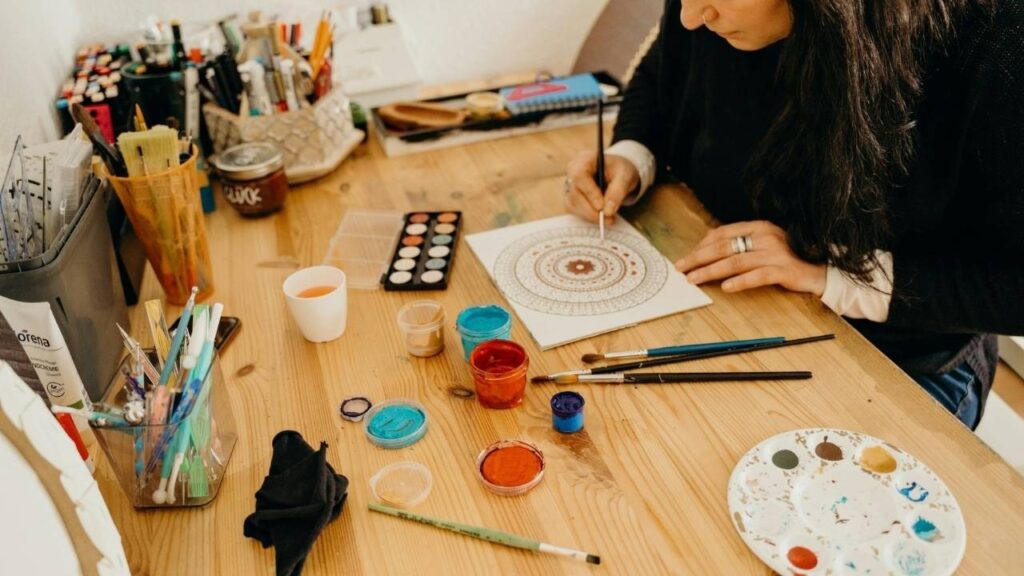
2. Mandala Drawing for Grounding: Drawing circular, symmetrical patterns activates the brain’s pattern recognition systems and produces a meditative focus that lowers heart rate and respiratory speed. Therapists frequently prescribe mandala exercises for patients experiencing panic episodes.
3. Clay and Tactile Sculpting: Working with clay engages the somatosensory cortex and provides bilateral motor stimulation that calms the nervous system. The physical act of kneading and shaping material produces grounding effects particularly effective during dissociative episodes.
4. Guided Color Emotion Mapping: Assign specific colors to emotions you are currently experiencing and fill a blank page with those colors without any representational intent. This technique externalizes internal emotional states and gives therapists valuable diagnostic information during sessions.
5. Collaborative Group Murals: Working alongside others on a shared creative project reduces social anxiety, builds trust, and creates a sense of collective accomplishment. Community organizations report that mural projects are among the most effective activities for re-engaging isolated individuals.
Barriers Preventing Wider Adoption of Art-Based Interventions
The Talent Misconception
The most persistent barrier is the widespread belief that artistic skill is a prerequisite for therapeutic benefit. This is categorically false. The Drexel cortisol study specifically confirmed that participants with no art experience received identical stress-reduction benefits as trained artists. The healing power of art lies entirely in the process of creation, not the quality of the product.
Insurance and Funding Gaps
Many healthcare systems still classify art therapy as “complementary” rather than essential, limiting insurance coverage and institutional funding. While the American Art Therapy Association continues advocating for policy reform, the volume of large-scale randomized controlled trials remains smaller than what pharmaceutical interventions typically produce a gap that perpetuates funding disparities.
Practitioner Shortages
Licensed art therapists require master’s-level education and extensive supervised clinical hours. Many rural and underserved regions lack qualified professionals entirely, creating access inequities that disproportionately affect communities with the highest mental health needs. Telehealth art therapy has begun addressing this gap, but digital delivery introduces its own limitations around material access and tactile engagement.
Related Topics and Keyword Cluster Overview
For readers and content creators exploring this topic further, the following semantic cluster represents the full topical range covered by this guide.
| Core Terms | Long-Tail Variations | Related Subtopics |
| Art therapy benefits | Art therapy for anxiety and depression | Neuroscience of creative healing |
| Creative expression mental health | Therapeutic art activities for adults | Cortisol reduction through art |
| Healing power of art | Art therapy for PTSD veterans | Neural plasticity and creativity |
| Emotional wellness through art | Creative strategies for stress relief | Mandala drawing for grounding |
| Art and anxiety relief | Group art therapy for loneliness | Expressive journaling techniques |
Conclusion
The scientific evidence, clinical outcomes, and real-world applications explored throughout this guide confirm a single undeniable reality: how art helps mental health is not a matter of opinion or anecdotal experience. It is a neurologically measurable, clinically validated phenomenon that transforms psychological wellbeing across every age group and demographic.
From veterans reclaiming emotional stability through painting to children finding safety in self-expression, from the neurochemical shifts documented in peer-reviewed journals to the community programs rebuilding lives the evidence demands recognition. The healing power of art deserves its place alongside established clinical interventions as a legitimate, accessible, and profoundly effective pathway to recovery.
The next step belongs to you. Whether you pick up a sketchbook, join a local workshop, or advocate for expanded creative therapy coverage in your community, every action moves the conversation forward. Emotional recovery is not confined to clinical offices and prescription bottles. It lives in the colors, shapes, and textures that human hands create when the mind needs healing most.
Do I need to be a skilled artist to benefit from art therapy?
Absolutely not. Clinical research consistently demonstrates that therapeutic benefits occur regardless of artistic skill level. The 2016 Drexel University study confirmed cortisol reduction in 75% of participants, including individuals with zero prior art experience. The process of creating not the product drives psychological improvement.
Can art therapy replace medication or traditional psychotherapy?
Art-based interventions work best as a complement to existing treatment plans, not as a standalone replacement. Many licensed therapists integrate creative activities alongside cognitive behavioral therapy, medication management, and other evidence-based approaches. Patients should always consult their healthcare provider before modifying any treatment regimen.
What types of art are most effective for anxiety relief?
Research supports multiple modalities. Mandala drawing activates pattern recognition and induces meditative states. Clay sculpting provides tactile grounding during dissociative or panic episodes. Expressive journaling combines verbal and visual processing for comprehensive emotional release. The most effective type depends on individual preference and the specific condition being addressed.
How quickly can someone expect results from therapeutic art practices?
Measurable cortisol reduction has been documented after a single 45-minute session. However, lasting neuroplastic changes such as increased gray matter density and improved emotional regulation require consistent practice over a minimum of eight weeks, according to neuroimaging studies published in Frontiers in Human Neuroscience.
Is art therapy covered by insurance?
Coverage varies significantly by country, provider, and policy type. In the United States, some insurance plans cover art therapy when delivered by a licensed and board-certified art therapist. The American Art Therapy Association maintains a directory of credentialed practitioners and provides guidance on navigating insurance authorization.
Can children benefit from art therapy for trauma?
Children are among the populations that respond most powerfully to creative therapeutic interventions. Because young children process emotions through imagery before developing full verbal capacity, art provides a developmentally appropriate channel for expressing grief, fear, confusion, and anger that they cannot yet articulate through conversation.