The dream of starting your own art business can feel overwhelming without a clear roadmap to guide your creative journey forward. Many talented artists possess incredible skills yet struggle to transform their passion into a sustainable and profitable venture. The gap between creating beautiful artwork and building a thriving enterprise requires more than talent alone it demands strategic planning, market awareness, and entrepreneurial discipline.
This comprehensive guide delivers an expert proven framework for starting your own art business using actionable strategies that real creative entrepreneurs rely on daily. You will discover essential insights on building an art brand identity, developing a creative business plan, navigating art market strategies, and establishing a profitable art career from the ground up. Each section covers freelance artist tips designed to accelerate growth.
Whether you are a painter, sculptor, digital artist, or mixed media creator, starting your own art business becomes achievable when you follow a structured approach. This guide on starting your own art business equips you with the confidence and knowledge to turn your artistic vision into lasting commercial success.
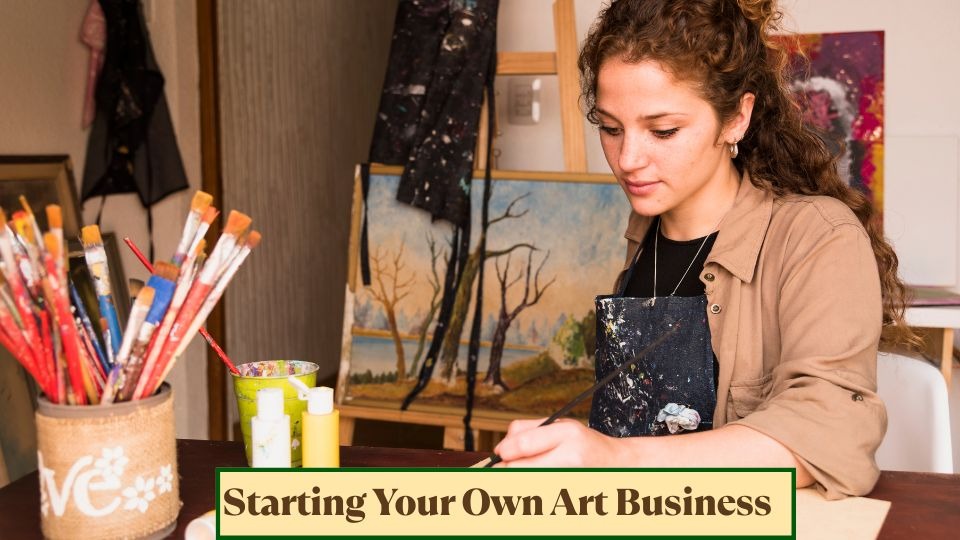
What Does Starting Your Own Art Business Actually Mean?
Starting your own art business goes far beyond simply selling a few paintings or sketches to friends and family. It involves creating a structured commercial entity around your creative talent, one that generates consistent revenue through strategic pricing, marketing, and customer relationship management. At its core, this journey transforms an artist from a hobbyist into a professional entrepreneur who treats creativity as both a passion and a livelihood.
A creative business plan serves as the foundation of this transformation. Without a clear plan outlining your goals, target audience, revenue streams, and growth milestones, even the most gifted artist will struggle to sustain long term success in an increasingly competitive marketplace.
The Evolution of Art Entrepreneurship
The concept of artists operating as independent business owners has deep historical roots stretching back centuries. Renaissance painters like Leonardo da Vinci and Michelangelo managed workshops that functioned as commercial enterprises, balancing artistic vision with client commissions and financial negotiations. However, the modern landscape of starting your own art business has changed dramatically with the arrival of digital platforms, social media, and global online marketplaces.
Today, freelance artist tips circulate widely across the internet, giving creators unprecedented access to knowledge that was once reserved for those with formal business training. Art market strategies have also evolved, allowing independent artists to reach international buyers without relying on traditional gallery representation. This democratization of opportunity makes the current era one of the most exciting times in history for creative entrepreneurs ready to build something meaningful.
Why Starting Your Own Art Business Matters Today
The importance of starting your own art business extends well beyond personal financial gain. In a world where automation and artificial intelligence are reshaping traditional career paths, creative professions offer a uniquely human value that technology cannot easily replicate. Art carries emotional depth, cultural significance, and individual perspective that machines simply cannot manufacture authentically.
Building a profitable art career allows you to contribute original work to your community while maintaining full creative control over your output. Unlike conventional employment where your schedule and projects are dictated by others, owning your creative venture gives you the freedom to choose which projects align with your artistic vision and personal values.
The Growing Demand for Independent Art
Consumer preferences have shifted noticeably toward handmade, original, and locally sourced creative products. People are increasingly seeking unique pieces that carry a story rather than mass produced decorations lacking personality. This cultural shift creates a tremendous opportunity for anyone serious about starting your own art business because the audience hungry for authentic creative work continues to expand every year.
Developing a strong art brand identity positions you to capture this growing demand effectively. When buyers connect with your story, style, and creative philosophy, they become loyal supporters who return repeatedly and recommend your work to others within their social circles.
Key Benefits of Building an Art Business
Launching a creative enterprise delivers advantages that reach into every corner of your personal and professional life. Here are the most impactful benefits that make starting your own art business a worthwhile pursuit for any dedicated artist.
- You gain complete creative freedom to produce work that reflects your authentic artistic voice without compromising your vision to satisfy an employer or corporate directive
- Multiple revenue streams become available including original sales, prints, commissions, licensing, teaching workshops, and digital downloads that collectively build a profitable art career over time
- Your art brand identity strengthens with every piece you release, gradually establishing you as a recognized name within your chosen niche and attracting higher value opportunities
- A well structured creative business plan helps you set measurable goals that keep your growth on track while preventing the financial uncertainty that discourages many talented artists from pursuing their dreams
- Flexible scheduling allows you to balance creative work with personal responsibilities, giving you a quality of life that rigid employment structures rarely offer to working professionals
These advantages compound as your reputation grows, making the initial effort of starting your own art business one of the most rewarding investments you can make in yourself.
How to Build a Strong Foundation for Your Art Business
Creating a lasting creative enterprise requires more than artistic skill. It demands careful planning across several critical areas that together form a stable platform for sustainable growth.
Developing Your Creative Business Plan
Every successful art venture begins with a solid creative business plan that maps out your short term and long term objectives clearly. This document should outline your target market, pricing strategy, marketing channels, and financial projections for at least the first two years. Freelance artist tips from experienced creative entrepreneurs consistently emphasize the importance of treating this plan as a living document that evolves alongside your business rather than a static file you write once and forget.
Art market strategies should feature prominently within your plan. Identifying where your ideal buyers spend their time, whether that involves online platforms, local art fairs, gallery exhibitions, or social media communities, allows you to focus your marketing energy where it produces the greatest return.
Crafting Your Unique Art Brand Identity
Your art brand identity is the emotional fingerprint that distinguishes your work from thousands of other creators competing for attention. It encompasses your visual style, your personal story, your values, and the consistent experience buyers receive when interacting with your business. Building this identity intentionally rather than letting it develop randomly gives you a significant competitive advantage in crowded marketplaces.
Freelance artist tips often highlight the importance of cohesive branding across all touchpoints including your website, social media profiles, packaging, and customer communications. Consistency builds trust, and trust converts casual browsers into committed collectors who support your profitable art career for years to come.

Common Challenges When Starting Your Own Art Business
Despite the many rewards, building a creative enterprise presents real obstacles that every aspiring art entrepreneur should anticipate. One of the most significant challenges is pricing artwork appropriately. Many artists undervalue their creations out of fear that higher prices will drive buyers away, yet underpricing damages perceived value and makes sustaining a profitable art career nearly impossible over time.
Another frequent struggle involves balancing creative production with business administration. Tasks like accounting, inventory management, customer service, and marketing consume valuable time that artists would rather spend creating. Art market strategies that include automation tools and outsourcing solutions can alleviate this burden considerably.
Self doubt also poses a persistent challenge. Starting your own art business requires putting your most personal work into the public sphere for judgment, which can feel vulnerable and intimidating. Experienced creative entrepreneurs recommend building a support network of fellow artists and mentors who understand these emotional dynamics and provide encouragement during difficult periods.
Real World Examples of Successful Art Businesses
Examining how other creators have built thriving ventures provides valuable inspiration and practical insight. Consider an independent watercolor artist who began selling original pieces at local farmers markets while simultaneously building an online presence through social media. Within two years, her freelance artist tips blog attracted thousands of monthly visitors, creating an additional revenue stream through sponsored content and digital tutorials.
Another compelling example involves a ceramic sculptor who developed a distinctive art brand identity centered around sustainable materials and minimalist design. By aligning his creative business plan with growing consumer interest in environmentally conscious products, he secured wholesale partnerships with boutique retailers across multiple cities.
A digital illustrator offers yet another perspective on starting your own art business successfully. She leveraged print on demand services to sell her designs on merchandise globally without managing inventory or shipping logistics. Her art market strategies focused entirely on building a passionate online community that organically promoted her work through word of mouth recommendations.
These real world scenarios prove that multiple unique routes exist toward achieving lasting success in this field.What connects every thriving art business is a combination of clear planning, authentic branding, strategic marketing, and relentless commitment to both the craft and the commerce surrounding it. Starting your own business becomes not just possible but genuinely exciting when you approach it with the right framework and mindset.
Conclusion
Transforming your creative passion into a thriving commercial venture is one of the most fulfilling journeys any artist can undertake. Throughout this guide, you have explored the definition, historical evolution, psychological importance, practical benefits, and real world examples that illuminate every critical aspect of starting your own art business. Each section was crafted to move you from uncertainty toward clarity and purposeful action.
Building a profitable art career requires patience, strategic thinking, and consistent effort over time. A well developed creative business plan combined with a compelling art brand identity creates the foundation every successful creative entrepreneur needs. Applying proven art market strategies and incorporating freelance artist tips into your daily routine accelerates growth in ways that raw talent alone simply cannot achieve.
Now is your moment to take everything you have learned about starting your own art business and transform your artistic vision into a sustainable venture. Your unique creative talent holds incredible value and the right audience is already eager to discover it.