The true black and white painting meaning goes far beyond the simple absence of color on a canvas. For centuries, artists have deliberately chosen monochromatic palettes to express emotions, philosophical ideas, and cultural narratives that colored works often cannot capture with the same intensity. These achromatic compositions carry a visual depth that challenges viewers to look beneath the surface and discover layers of hidden artistic intention.
This comprehensive guide explores the black and white painting meaning through the lens of art history, symbolism, and modern creative expression. You will uncover how monochrome art symbolism has shaped movements from abstract expressionism to contemporary minimalism. We examine the deeper significance behind achromatic artwork interpretation and reveal how contrast symbolism in paintings communicates powerful messages about duality, conflict, and harmony.
Whether you are an art enthusiast or a practicing creator, understanding black and white painting meaning transforms the way you experience every grayscale masterpiece you encounter. This exploration of black and white painting meaning will sharpen your ability to read visual narratives and appreciate monochromatic art philosophy with entirely fresh and informed eyes.
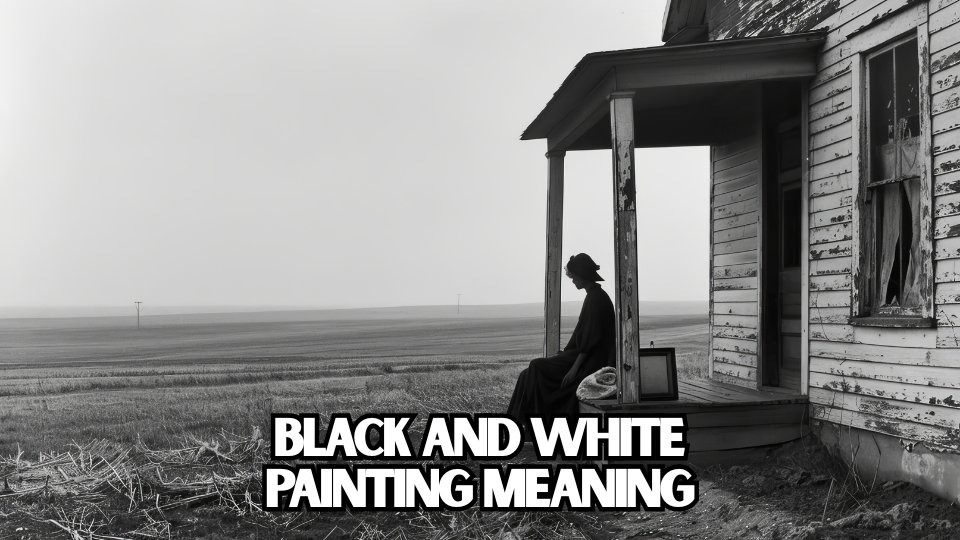
What Does Black and White Painting Meaning Truly Represent?
At its most fundamental level, black and white painting meaning refers to the intentional use of only achromatic tones to convey emotion, narrative, and philosophical depth on canvas. Unlike colorful compositions that rely on vibrant hues to attract attention, monochromatic works demand a deeper engagement from the viewer. Every brushstroke, shadow, and highlight carries amplified significance when color is deliberately removed from the equation.
Artists who choose to work exclusively in black and white are making a conscious creative statement. They strip away the distraction of color to focus entirely on form, texture, light, and composition. This deliberate restraint transforms each piece into an exercise in visual storytelling where contrast becomes the primary language of expression.
The Origins and Evolution of Monochromatic Art
The tradition of creating art without color stretches back thousands of years to ancient ink wash paintings originating in East Asia. Chinese and Japanese masters perfected the technique of using varying ink densities to represent landscapes, spiritual themes, and natural beauty with remarkable subtlety. Monochrome art symbolism during this era was deeply connected to philosophical ideas about simplicity, balance, and inner peace.
In Western art history, the Renaissance period saw artists using grisaille techniques to create works entirely in grey tones. By the twentieth century, movements like abstract expressionism and minimalism elevated achromatic artwork interpretation to entirely new heights. Artists such as Franz Kline and Robert Motherwell demonstrated that black and white painting meaning could carry emotional weight equal to or exceeding any full color masterpiece.
Why Black and White Painting Meaning Holds Such Deep Importance
Understanding black and white painting meaning matters because it unlocks a dimension of artistic appreciation that most casual viewers completely overlook. When you comprehend how monochromatic art philosophy operates, every museum visit and gallery experience becomes infinitely richer and more rewarding.
The importance extends beyond personal enrichment. Art collectors, historians, and critics all recognize that contrast symbolism in paintings often communicates themes of duality, morality, and existential tension more effectively than color ever could. Light against dark represents hope against despair, knowledge against ignorance, and life against death in ways that resonate across every culture and era.
How Contrast Communicates Emotion
The interplay between black and white on canvas triggers deep psychological responses in viewers. Pure black areas can evoke feelings of mystery, grief, or power, while white spaces suggest purity, openness, or vulnerability. When these opposing forces meet on a single surface, the resulting tension creates an emotional experience that feels raw and unfiltered.
Contrast symbolism in paintings becomes particularly effective when artists manipulate the ratio between dark and light areas. A composition dominated by darkness with a small burst of white communicates an entirely different narrative than one bathed in light with subtle dark accents. This nuanced control over achromatic artwork interpretation is what separates amateur work from a true grayscale masterpiece.
Key Benefits of Understanding Monochromatic Art
Developing a deeper appreciation for black and white painting meaning delivers several meaningful advantages for anyone interested in art, creativity, or visual culture. These benefits apply equally to collectors, students, and practicing artists.
- You develop a sharper eye for composition and structural balance because the absence of color forces you to evaluate form, line, and spatial relationships with greater precision and attention to detail
- Your ability to interpret monochrome art symbolism across different historical periods and cultural contexts expands significantly, making you a more informed and confident art enthusiast
- Creative skills improve dramatically as studying monochromatic art philosophy teaches restraint, intentionality, and the power of simplicity in any artistic discipline you pursue
- Emotional intelligence deepens when you learn to read the psychological narratives embedded within contrast symbolism in paintings, giving you tools to understand human expression beyond spoken language
- Investment and collecting decisions become more informed because recognizing a genuine grayscale masterpiece requires the kind of trained eye that only comes from understanding black and white painting meaning thoroughly
These advantages compound over time as your visual literacy grows stronger with each new work you study and analyze.
How to Interpret Black and White Paintings Effectively
Reading monochromatic artwork requires a different approach than analyzing colorful compositions. Without the distraction of hue and saturation, your focus must shift entirely toward the elements that carry meaning in an achromatic context.
Analyzing Composition and Spatial Balance
Begin by observing how the artist distributes dark and light areas across the canvas. Notice whether the composition feels symmetrical or deliberately unbalanced. Symmetry often suggests harmony and order, while asymmetry may communicate tension, movement, or emotional unrest. Achromatic artwork interpretation becomes much more intuitive once you train yourself to read these spatial relationships as a visual language.
Pay attention to where your eye naturally travels across the piece. Skilled artists use value contrast to guide the viewer through a deliberate visual journey. The areas of greatest contrast typically mark the focal points where the most important narrative elements reside within any grayscale masterpiece.
Reading Texture and Brushwork
Texture plays an amplified role in monochromatic pieces because it becomes one of the few tools available to create visual variety and depth. Smooth, blended areas suggest calm and softness, while rough, aggressive strokes communicate energy, chaos, or raw emotion. Monochromatic art philosophy values these textural decisions as deeply as any color choice in a traditional painting.
The thickness of paint application also carries meaning. Heavy impasto techniques create physical shadows on the canvas surface, adding a three dimensional quality that enhances the overall impact of contrast symbolism in paintings beyond what flat applications can achieve.

Common Challenges When Studying Monochromatic Artwork
Despite its visual simplicity, achromatic art presents unique difficulties for viewers and students. One of the most common challenges is the tendency to dismiss black and white painting meaning as less complex than colorful work. This misconception prevents many people from engaging deeply enough to discover the rich layers of intention hidden within monochrome art symbolism.
Another obstacle involves cultural context. The meaning assigned to black and white varies significantly across different societies and historical periods. What represents mourning in one culture may symbolize celebration in another. Without understanding these contextual differences, accurate achromatic artwork interpretation becomes nearly impossible and can lead to fundamentally flawed conclusions about an artist’s intentions.
Emotional accessibility also presents difficulties. Some viewers find monochromatic work emotionally cold or distant compared to vibrant compositions. Overcoming this perception requires patience and willingness to sit with a piece long enough for its subtle emotional narratives to emerge naturally.
Real World Examples That Illuminate the Concept
Examining specific works brings theoretical knowledge of black and white painting meaning into vivid practical focus. Pablo Picasso’s Guernica, though technically painted in shades of grey, blue grey, and white, demonstrates how removing warm color amplifies the horror of war with devastating emotional clarity.
Franz Kline’s large scale abstract works showcase how bold black gestures against white backgrounds can communicate raw physical energy and emotional intensity. His paintings prove that monochromatic art philosophy does not require representational imagery to deliver powerful human experiences.
Contemporary artist Robert Longo creates hyper realistic charcoal drawings that blur the boundary between photography and painting. His work demonstrates that black and white painting meaning continues to evolve and challenge audiences in the modern era. These pieces reveal how contrast symbolism in paintings remains as relevant and compelling today as it was centuries ago, proving that the absence of color will never diminish artistic power.
Conclusion
The world of monochromatic art holds far more depth and significance than most viewers initially realize. Throughout this guide, you have journeyed through the definition, historical roots, psychological impact, practical interpretation techniques, and real world examples that reveal the true black and white painting meaning hidden within every achromatic composition. Each section was crafted to transform how you experience and appreciate these powerful works of art.
Monochrome art symbolism continues to shape contemporary creative expression just as profoundly as it influenced ancient masters centuries ago. Developing skills in achromatic artwork interpretation and recognizing contrast symbolism in paintings allows you to engage with art on a deeply intellectual and emotional level. Building confidence in reading monochromatic art philosophy opens doors to understanding every grayscale masterpiece with clarity and genuine insight.
Now is the perfect moment to apply this knowledge and explore black and white painting meaning with fresh eyes wherever your artistic journey takes you next.